
Direct Answer
Downward penile curvature can be normal, especially if it has been present since puberty and hasn’t changed over time. However, a new or worsening downward curve—particularly when accompanied by pain, erectile dysfunction, or penile shortening—may indicate Peyronie’s disease and should be evaluated by a qualified healthcare professional.
What Is Downward Penile Curvature?

Penile curvature refers to a bend in the penis that becomes more noticeable during erection. A downward curve occurs when the penis angles toward the feet rather than straight outward. This can range from mild and harmless to severe enough to interfere with sexual function or cause distress.
To understand whether a downward curve is concerning, it’s important to first understand what is considered normal variation versus a medical condition.
Is Penile Curvature Normal?
Yes—some degree of penile curvature is normal. Studies suggest that up to 20% of men have a noticeable curve, often present since adolescence. A slight curve during an erection is common and often harmless, especially if it is mild (less than 30 degrees). Normal curvature does not cause pain, does not worsen over time, and typically does not interfere with erections or intercourse.
That said, changes in curvature later in life warrant closer attention.
What Does a 30 Degree Curve Look Like—and Is It Too Much?
A 30-degree curve is often used clinically as a reference point. Curves under 30 degrees are frequently manageable and may not require treatment if they are stable and painless. Curves over 30 degrees, especially if progressive, are more likely to interfere with sexual activity.
This distinction becomes particularly important when comparing lifelong curvature to acquired conditions like Peyronie’s disease.
Congenital Penile Curvature Explained
Congenital penile curvature is present from birth or becomes noticeable during puberty. It results from uneven development of the penile tissues and is not associated with scar tissue or plaques.
Men with congenital curvature typically have:
- No pain
- No progression over time
- Normal erectile function
Understanding congenital curvature helps differentiate it from disease-related changes.
Why Does the Penis Curve to the Left or Downward?
The direction of curvature depends on which tissues are shorter or tighter. Abnormalities or differences in elastic tissue formation may contribute to congenital penile curvature. A downward curve may result from shorter ventral tissues or structural asymmetry. Leftward or rightward curves follow similar principles.
At this stage, direction alone does not indicate disease—but progression does.
What Is PD in Men? (Peyronie’s Disease)
Peyronie’s disease (PD) is an acquired condition caused by fibrous plaque formation in the connective tissue of the penis. Peyronie’s disease is a disorder in which scar tissue, called plaque, forms under the skin of the penis. These plaques prevent normal expansion during erection, leading to curvature, pain, and sometimes erectile dysfunction.
Peyronie’s disease often develops gradually and is most commonly diagnosed in men between 40 and 60, though younger men can be affected.
Approximately 1 in 100 men in the United States over the age of 18 have been diagnosed with Peyronie’s disease, and it is thought to happen in about 4 out of 100 men between the ages of 40 and 70.
Peyronie’s disease is not contagious or caused by any known transmittable disease.
Peyronie’s Disease and Downward Curvature
When plaques form on the top (dorsal side) of the penis, they can cause a downward bend during erection. This type of curvature is commonly associated with pain during erections and may worsen during the early phase of the condition.
Understanding how Peyronie’s affects erection mechanics helps explain associated symptoms.
Congenital Curvature vs Peyronie’s Disease
| Feature | Congenital Curvature | Peyronie’s Disease |
| Onset | Puberty | Adulthood |
| Progression | Stable | Often progressive |
| Pain | No | Common early |
| Plaque | No | Yes |
| Erectile Dysfunction | Rare | Common |
This comparison is often the turning point for patients deciding to seek professional care.
Downward Curvature, Erectile Function, and Disease Progression
A curved penis can affect erectile function, particularly when curvature interferes with rigidity or causes pain. In Peyronie’s disease, erectile dysfunction may occur due to impaired blood flow, psychological stress, or tissue rigidity.
Peyronie’s disease progresses through two phases:
- Acute phase: Pain, inflammation, changing curvature
- Chronic phase: Stable curvature, reduced pain, persistent structural changes
During the chronic phase, the hard plaques in Peyronie’s disease may collect calcium (calcium buildup) and become very hard, almost like a bone.
Recognizing these phases is critical for timely intervention.
Diagnosing Peyronie’s Disease
Diagnosis typically involves a detailed medical and sexual history, family history, and physical exam. A urologist may assess the penis in both flaccid and erect states, sometimes using ultrasound to identify plaques and evaluate blood flow.
To diagnose Peyronie’s disease, a healthcare provider will evaluate risk factors, take a focused patient history, and may use imaging tests such as ultrasound to detect calcium buildup.
Early diagnosis allows for more conservative treatment options.
Consulting a urologist is advised if sudden changes in curvature, pain, or lumps are noticed.
Autoimmune Factors and Connective Tissue Changes
Emerging research suggests Peyronie’s disease may involve abnormal wound healing, autoimmune disease, or connective tissue disorders. Autoimmune disease can cause the immune system to attack cells in the penis, leading to inflammation, scar tissue, and plaque formation, while connective tissue disorders such as Dupuytren’s contracture increase susceptibility by affecting tissue structure and wound healing. Excess collagen deposition leads to stiff plaques that limit elasticity.
This connective tissue dysfunction explains why the condition behaves differently from congenital curvature.
Clinical Trials and Emerging Treatments
Clinical trials are exploring new medical therapies for Peyronie’s disease, including biologic therapies, collagen-modulating agents, and regenerative techniques. These treatments aim to reduce plaque formation and improve penile flexibility.
Patients interested in advanced care may benefit from clinics that stay current with evolving research. It is important to consult a health care professional before participating in clinical trials.
Common Symptoms of Downward Penile Curvature
Peyronie’s disease symptoms include physical symptoms such as plaque formation, curvature, indentation, and pain during erections.
- Visible bend during erection
- Pain with erections
- Penile shortening
- Erectile dysfunction
- Emotional distress
- External bleeding (a less common symptom that warrants further medical investigation)
Symptoms vary based on cause and disease stage.
Potential Complications if Left Untreated
Untreated pathological curvature may lead to worsening erectile dysfunction, difficulty with penetration, and reduced quality of life.
This highlights why early evaluation matters.
How to Manage Penile Curvature at Home
At-home strategies may include stress reduction, avoiding aggressive sexual activity, and pelvic floor relaxation. However, home management is supportive—not curative—for Peyronie’s disease.
Penile traction therapy is a non-surgical option that may help reduce curvature and improve penile length.
The Role of Pelvic Floor Dysfunction
Chronic pelvic floor tension can contribute to penile pain and erectile difficulties. Pelvic floor physical therapy may support symptom relief, particularly when combined with medical care.
Emotional and Psychological Impact
Living with Peyronie’s disease or congenital penile curvature can take a significant toll on emotional well-being and psychological health. The presence of penile curvature, painful erections, or erectile dysfunction can lead to feelings of embarrassment, anxiety, and even depression—especially when these symptoms interfere with sexual intercourse or intimate relationships. Many men find that changes in their sexual function or the appearance of their penis affect their self-esteem and confidence, sometimes leading to withdrawal from sexual activity or avoidance of intimacy.
When to See a Specialist
You should consult a specialist if curvature is new, worsening, painful, or affecting sexual function. Consulting a urologist who specializes in sexual medicine can help determine the appropriate treatment for your specific condition, as some cases may require surgical treatment.
Surgery may be recommended for men with significant penile curvature that affects sexual function.
Where to Seek Help?
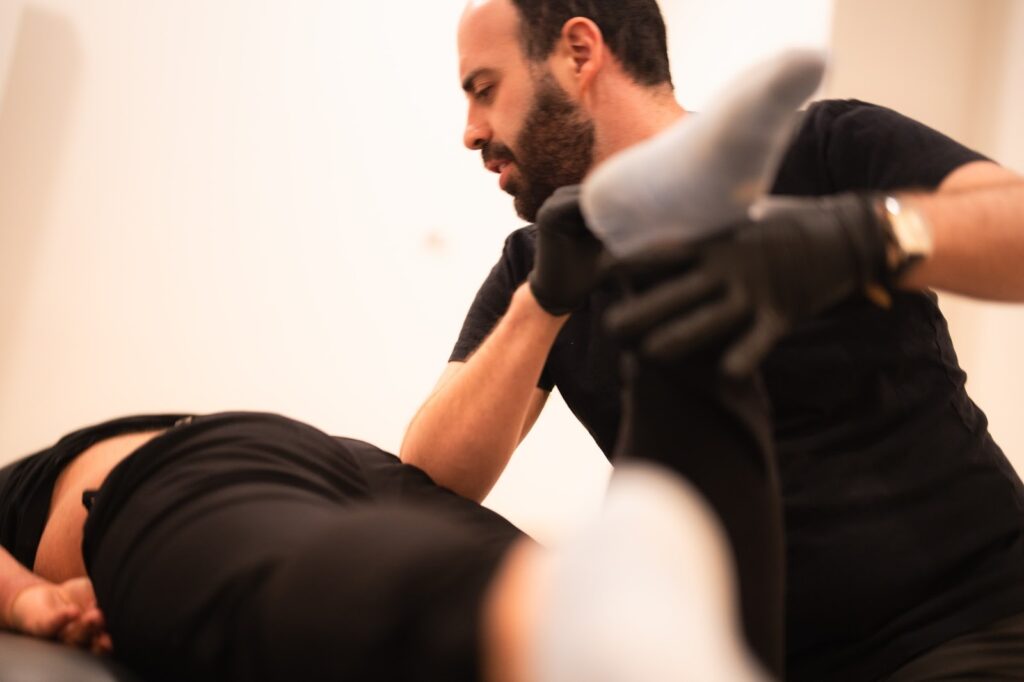
At Pelvis NYC, our pelvic health specialists and pelvic floor physical therapists work collaboratively with urologic care to address penile pain, pelvic floor dysfunction, and sexual health concerns using evidence-based, patient-centered treatment plans.
Need help? Schedule a private consultation with us!
Case Insight
A 38-year-old male with progressive downward curvature and pain during erection was evaluated early and managed conservatively, preventing progression to severe deformity.
FAQs
Is downward penile curvature normal?
Yes, if present lifelong and stable. New or worsening curvature should be evaluated.
Can Peyronie’s disease cause erectile dysfunction?
Yes, especially during the acute phase.
What does a 30-degree curve mean?
It is a clinical benchmark; curves over 30 degrees may affect function.
Can you be born with Peyronie’s disease?
No. Peyronie’s disease is acquired, not congenital.
Can pelvic floor therapy help?
Yes, especially when pelvic muscle tension contributes to pain or dysfunction.
Final Takeaway
Downward penile curvature exists on a spectrum— from normal anatomical variation to medically significant disease. Understanding the difference empowers men to seek timely, appropriate care and protect long-term sexual health.
You might be interested in learning more about Jelqing.


No comment yet, add your voice below!