
Pelvic muscle dysfunction affects far more people than most realize — and it’s frequently misdiagnosed, undertreated, or dismissed as something patients just have to live with. If you’re dealing with bladder leaks, pelvic pressure, pain during sex, or constipation that won’t resolve, your pelvic floor muscles may be the source. The good news: it’s highly treatable.
Quick answer
Pelvic muscle dysfunction (also called pelvic floor dysfunction) is a condition in which the muscles of the pelvic floor fail to contract, relax, or coordinate properly. It affects both men and women and causes a wide range of symptoms — from urinary leakage and pelvic pain to sexual dysfunction and bowel problems. According to StatPearls, pelvic floor dysfunction affects up to 25% of women in the U.S. and is significantly underrecognized in men. Pelvic floor physical therapy in New York City is one of the most effective, non-surgical treatments available.
Not sure if pelvic muscle dysfunction is behind your symptoms? Book a free 15-minute teleconsultation with Dr. Adam — no referral needed, no waiting room.What exactly is pelvic muscle dysfunction?
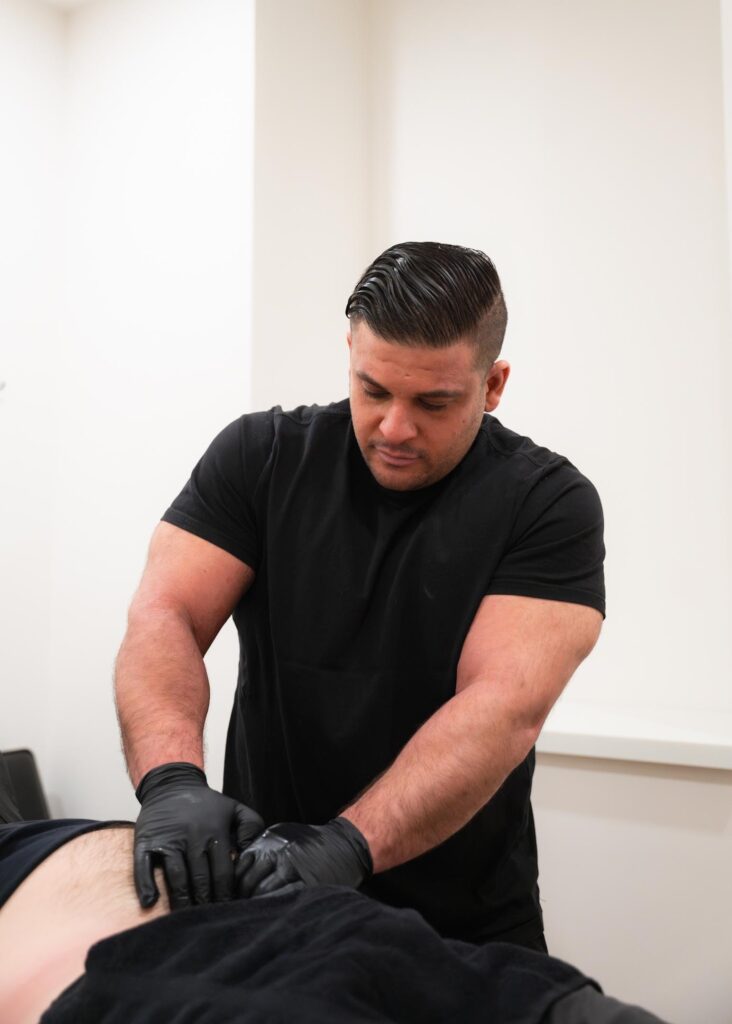
Pelvic muscle dysfunction — more formally called pelvic floor dysfunction (PFD) — refers to abnormal activity of the group of muscles spanning the base of the pelvis. These muscles support the bladder, bowel, uterus (in women), and prostate (in men), and they coordinate dozens of functions you do every day: urinating, having a bowel movement, having sex, and stabilizing your spine and hips.
When those muscles stop working correctly, symptoms can appear across multiple body systems at once — which is one reason PFD is so commonly missed. A patient might see a urologist for leakage, a gastroenterologist for constipation, and a gynecologist for pelvic pain, and receive a different answer from each.
The two types of pelvic muscle dysfunction
Pelvic floor dysfunction is part of a broader group of pelvic floor disorders.
The pelvic floor is made up of muscles and connective tissues that support the pelvic area and help regulate bladder function, bowel movements, and sexual function. Problems in this system can affect women and men, and they often overlap with functional gastrointestinal disorders such as irritable bowel syndrome or neurologic conditions such as spinal cord injury.
| Type | What’s happening | Common symptoms |
| Hypertonic (high-tone) | Muscles are too tight; high muscle tone means they can’t relax properly, and pelvic floor dyssynergia can contribute to functional constipation | Pelvic pain, painful sex, urinary urgency, constipation |
| Hypotonic (low-tone) | Muscles are too weak; can’t contract properly | Urinary incontinence, fecal incontinence, involuntary leakage, pelvic organ prolapse, reduced sensation |
Diagnosis starts with a medical history and physical exam of the pelvic floor, including assessment of specific pelvic floor muscles and surrounding muscles.
What are the symptoms of pelvic muscle dysfunction?
Pelvic muscle dysfunction presents differently depending on which muscles are affected and whether they’re too tight or too weak. At our Chelsea clinic in New York City, we regularly see patients who’ve had symptoms for years before connecting them to their pelvic floor.
Urinary symptoms
- Leaking urine when you cough, sneeze, laugh, or lift (stress incontinence)
- Sudden, intense urge to urinate that’s hard to control (urge incontinence)
- Frequent trips to the bathroom — more than 8 times per day
- Difficulty starting or stopping the urine stream
- Feeling like the bladder never fully empties
Bowel symptoms
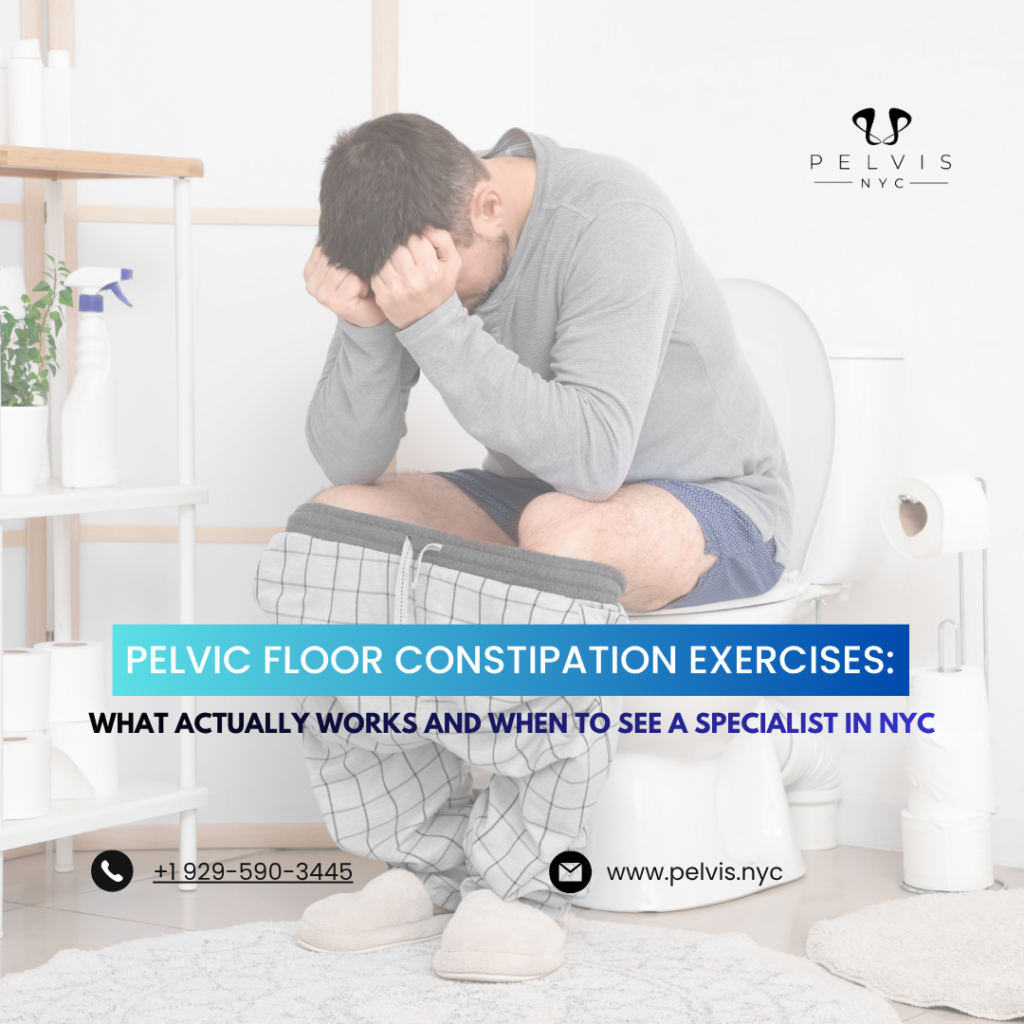
- Chronic constipation or straining to pass stool, including functional constipation; testing may also look for pelvic floor dyssynergia with anorectal manometry or a balloon expulsion study
- Feeling of incomplete bowel emptying
- Fecal incontinence or urgency, which can relate to anal sphincter function
- Pain or pressure around the rectum
Bladder irritants such as artificial sweeteners can worsen urgency in some patients, and avoiding them may improve symptoms.
Pelvic pain and sexual symptoms
- Persistent aching, stabbing, or pressure in the lower abdomen, tailbone, or groin that may become chronic pain
- Pain during or after intercourse can affect sexual function (in both men and women)
- Erectile dysfunction or pain with erections (in men)
- Vaginismus — involuntary muscle contraction making penetration painful or impossible (in women)
- Reduced genital sensation
These symptoms of pelvic floor problems can vary widely and are sometimes overlooked, which is why evaluation and pelvic floor therapy are often important.
Pelvic organ prolapse
Pelvic organ prolapse (POP) — a condition in which one or more pelvic organs (bladder, uterus, or rectum) descend into or outside the vaginal canal — is a direct result of weak pelvic floor support. It affects approximately 1 in 4 women over their lifetime, according to the American Urogynecologic Society, and risk can increase after pregnancy and vaginal deliveries. Symptoms include a bulging or heaviness sensation in the vagina, especially after prolonged standing.
Pain that lasts for more than three to six months can be chronic pelvic pain. These symptoms can also affect sexual function, physical comfort, and posture, and some cases eventually require surgical interventions.
What causes pelvic muscle dysfunction?
Pelvic floor dysfunction rarely has a single cause. It’s usually the result of multiple contributing factors — which is why a whole-body assessment, like the one we perform at Pelvis NYC, is essential to effective treatment.
- Pregnancy and childbirth — vaginal delivery stretches and can tear pelvic floor muscles and nerves; even C-section carries pelvic floor impact from pregnancy itself, and risk rises after pregnancy and vaginal deliveries
- Chronic straining — years of bearing down to pass stool overloads the pelvic floor
- Pelvic or abdominal surgery — hysterectomy, prostatectomy, hernia repair
- High-impact sports or heavy lifting — repetitive strain on the pelvic floor over time
- Trauma or injury — falls, accidents, or sexual trauma can cause lasting pelvic floor guarding
- Stress and anxiety — the pelvic floor is highly responsive to the nervous system; chronic tension manifests there
- Aging — natural muscle weakening and connective tissue changes over time
- Hormonal changes — menopause-related estrogen loss accelerates pelvic floor tissue thinning
- Neurological conditions — conditions such as spinal cord injury can disrupt pelvic floor coordination and bowel or bladder control
At our NYC clinic, we often see a pattern unique to busy urban professionals: high-stress lifestyles, prolonged sitting, and chronic breath-holding or core bracing that quietly overloads the pelvic floor over months or years before symptoms appear. These pelvic floor issues also commonly overlap with chronic conditions that affect daily life.
How to treat pelvic floor dysfunction?
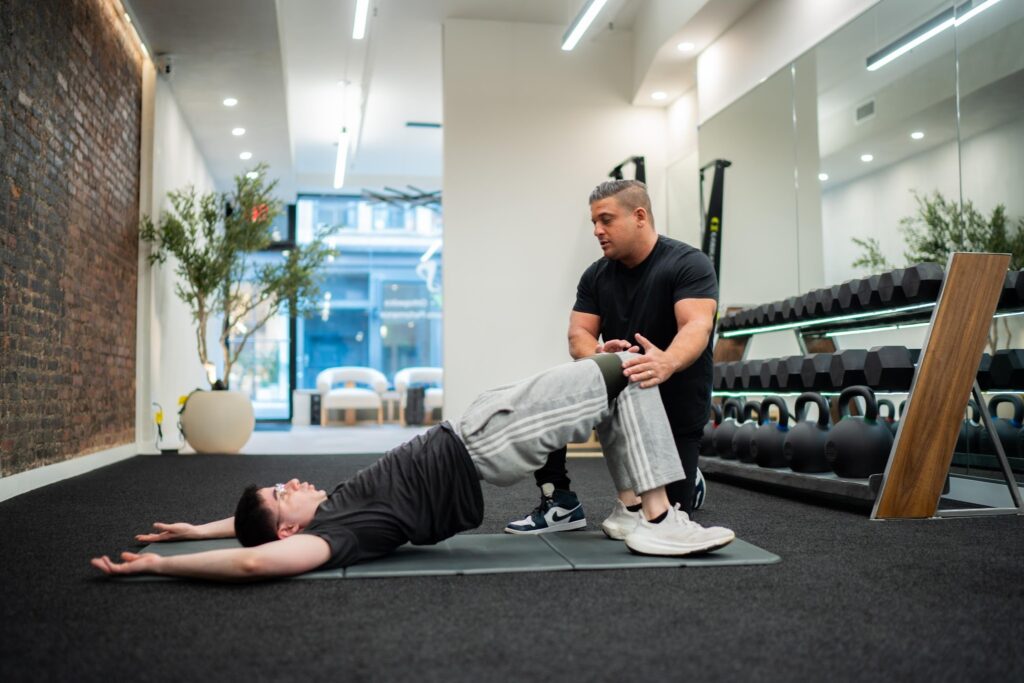
Pelvic floor physical therapy is the first-line, evidence-supported treatment for most forms of pelvic muscle dysfunction — and in many cases, it resolves symptoms without surgery or medication. A 2022 systematic review in the American Journal of Obstetrics and Gynecology found that pelvic floor muscle training is effective for both hypertonic and hypotonic dysfunction when appropriately tailored to the patient.
At Pelvis NYC, we treat patients individually. No two pelvic floors are the same, and the plan for a postpartum woman with prolapse looks very different from the plan for a 32-year-old man with chronic pelvic pain. A pelvic floor therapist starts with a detailed assessment to build personalized treatment options, often combining pelvic floor exercises, relaxation techniques, and other nonsurgical treatments to reduce symptoms. Our physical therapist may also use electrical stimulation when indicated, and therapy sessions can include myofascial release as part of hands-on care. Our approach includes:
- Internal and external manual therapy — hands-on techniques to release tight muscles, reduce trigger points, restore tissue mobility, and in some cases complement trigger point injections
- Pelvic floor muscle retraining — targeted strengthening or relaxation depending on whether the dysfunction is hypertonic or hypotonic
- Functional movement and breath work — retraining how you breathe, brace, and move so your pelvic floor isn’t constantly overloaded, alongside practical lifestyle modifications
- Bladder and bowel retraining — evidence-based behavioral strategies to normalize urinary and bowel habits and support lasting lifestyle changes
- Telehealth follow-up — ongoing support between in-person sessions via our telehealth program
We also treat male pelvic floor dysfunction — including chronic pelvic pain, post-prostatectomy incontinence, and erectile dysfunction — in a same-gender care environment, which many men find far more comfortable than a traditional clinical setting.
When should you see a pelvic floor specialist in NYC?
See a specialist if any of the following apply — and don’t wait until symptoms become severe. Earlier intervention consistently produces better outcomes.
- You’ve had bladder leakage of any kind, even occasional
- You experience pelvic, hip, or tailbone pain lasting more than a few weeks
- Sex is painful or has become painful after previously being comfortable
- You strain to have a bowel movement regularly
- You’ve been told you have prolapse, interstitial cystitis, or chronic prostatitis
- You’re pregnant or recently postpartum and experiencing any pelvic symptoms
- You have pelvic floor concerns but have been told everything is “normal”
New York State allows direct access to physical therapy — no physician referral is required to begin pelvic floor PT at Pelvis NYC.
Frequently asked questions
What’s the difference between pelvic muscle dysfunction and pelvic floor dysfunction?
The terms are used interchangeably. “Pelvic floor dysfunction” is the more formal clinical term, while “pelvic muscle dysfunction” reflects that the problem lies specifically in how the pelvic muscles contract, relax, and coordinate. Both refer to the same broad category of conditions.
Can men get pelvic floor dysfunction?
Yes — pelvic muscle dysfunction is common in men, though it’s far underdiagnosed. In men, it often presents as chronic pelvic pain, urinary urgency or leakage (especially after prostate surgery), painful ejaculation, or erectile dysfunction. Pelvis NYC treats men in a same-gender clinical environment specifically designed to be judgment-free.
How many sessions does pelvic floor therapy take?
Most patients see meaningful improvement within 6–10 sessions. The full course depends on the type and severity of dysfunction, how long symptoms have been present, and how the patient responds to treatment. We reassess progress regularly and adjust the plan at each visit.
Do I need a doctor’s referral to start pelvic floor PT in NYC?
No. New York State has direct access laws that allow you to begin physical therapy without a physician referral. You can book directly with Pelvis NYC — or start with a free 15-minute teleconsultation if you’d like to discuss your symptoms first.
Can pelvic floor dysfunction cause lower back pain?
Yes. The pelvic floor muscles are part of the deep core system, working alongside the diaphragm, deep abdominals, and multifidus muscles. When the pelvic floor is dysfunctional, it disrupts that entire system, which often manifests as lower back pain, hip pain, or SI joint pain. Many patients come to us with back pain as their primary complaint and discover a pelvic floor component that other providers missed.
Does insurance cover pelvic floor therapy at Pelvis NYC?
Pelvis NYC is an out-of-network provider. Many patients receive partial reimbursement through their out-of-network benefits — we provide detailed superbills after each session. Contact us before your first appointment, and we’ll help you understand your coverage options.
Pelvic muscle dysfunction is treatable — and the sooner you address it, the better the outcomes. Schedule your first appointment at Pelvis NYC at 110 West 17th Street, Chelsea, New York City, or call (929) 590-3445. We treat men and women in a whole-body, same-gender, judgment-free environment.
Dr. Adam Gvili, PT, DPT
Dr. Adam Gvili is the founder and lead clinician at Pelvis NYC, a pelvic floor and orthopedic physical therapy clinic in Chelsea, New York City. He specializes in pelvic floor dysfunction, pelvic organ prolapse, male pelvic health, and sports performance rehabilitation, and has been featured in Bloomberg, Business Insider, and Experience Life magazine. He offers a free 15-minute teleconsultation for all new patients.
No comment yet, add your voice below!